Project 3:
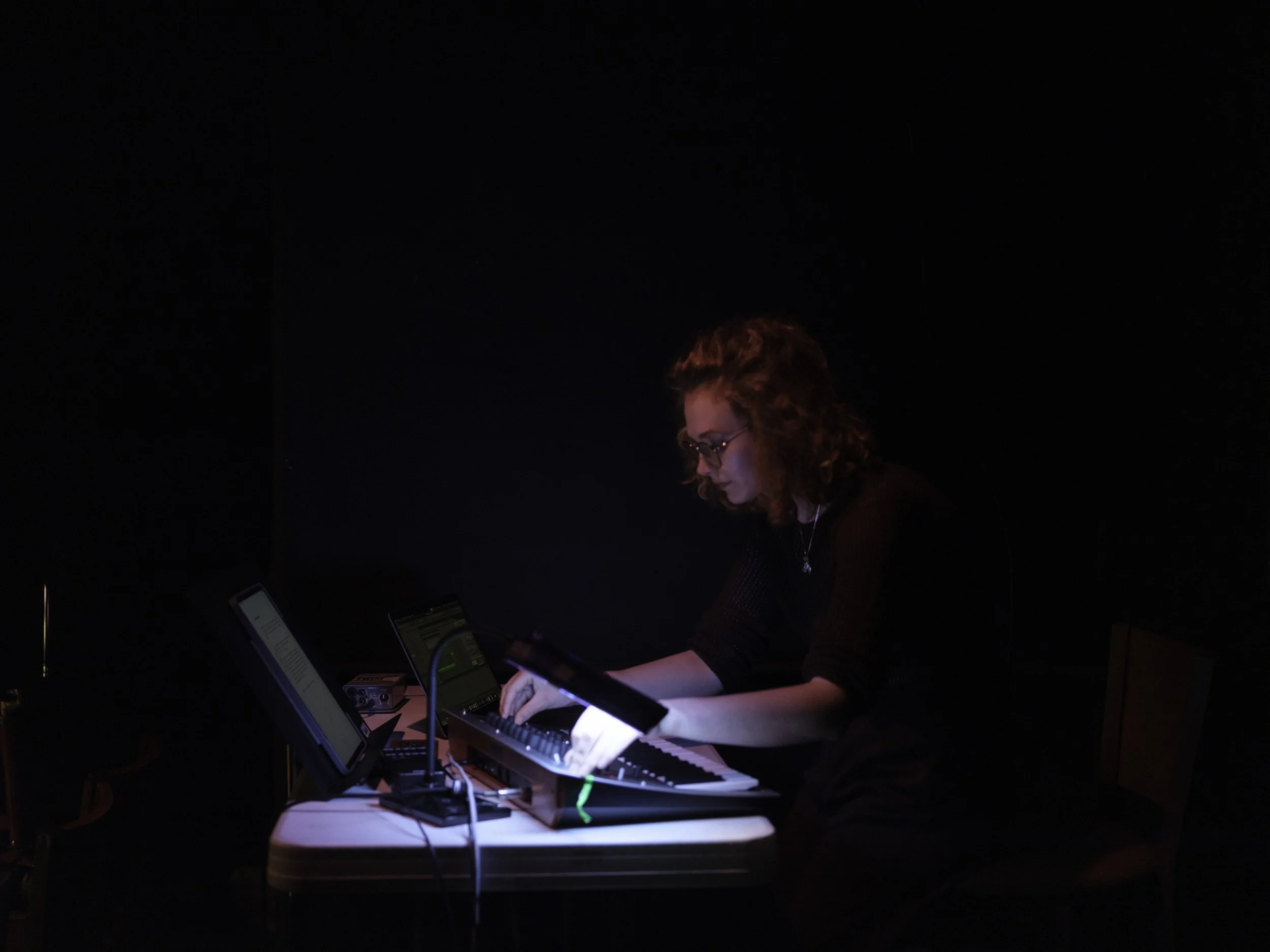
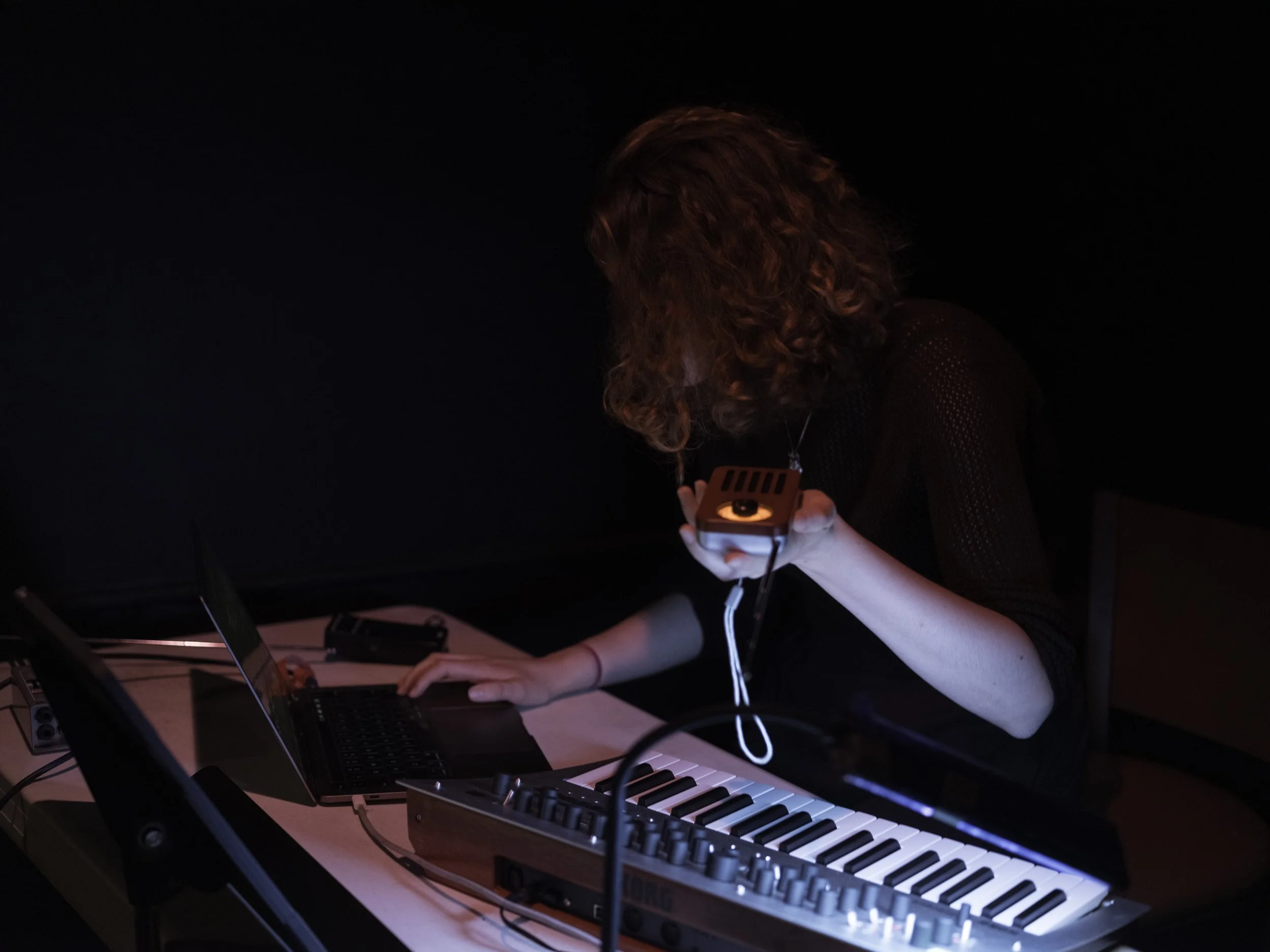
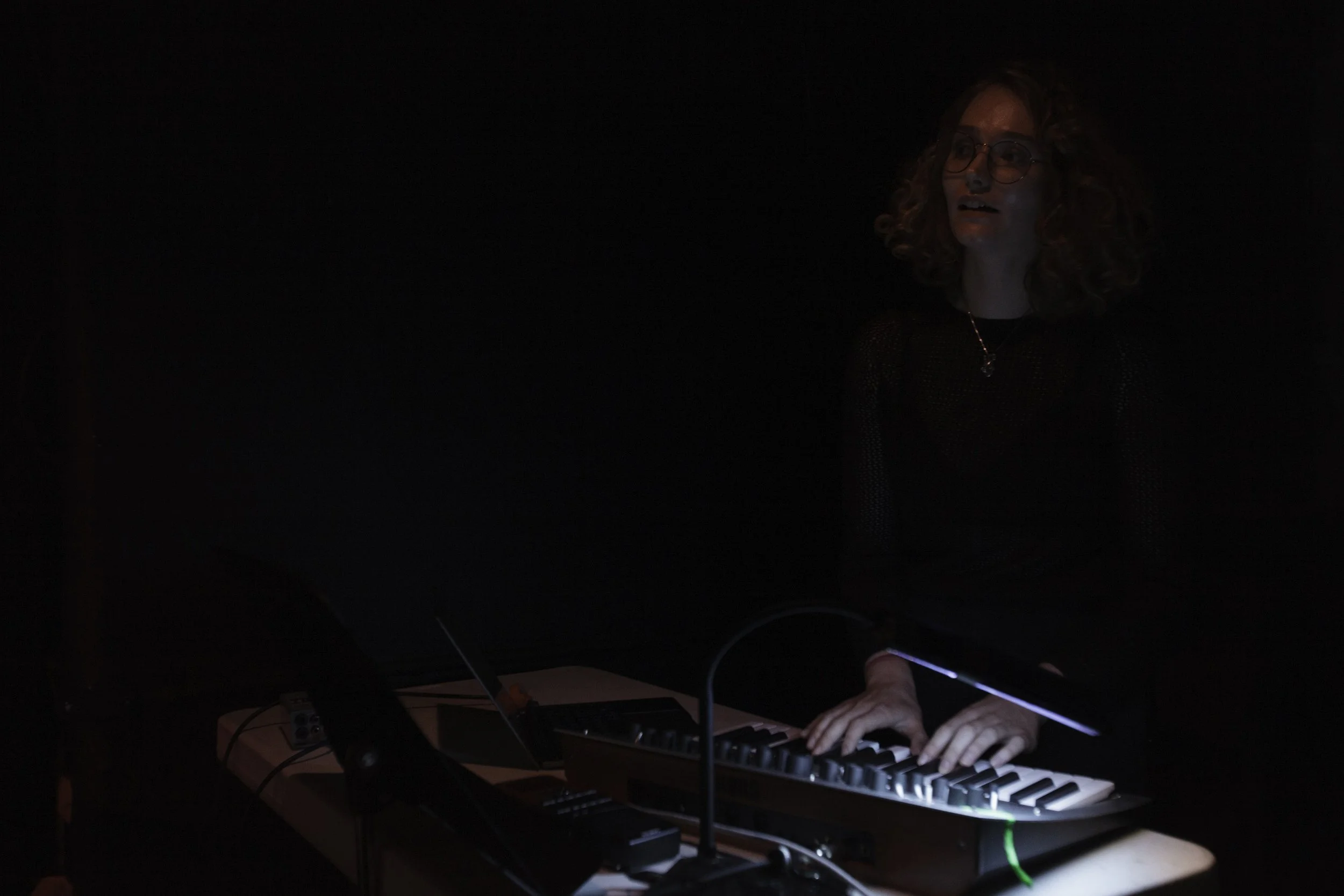
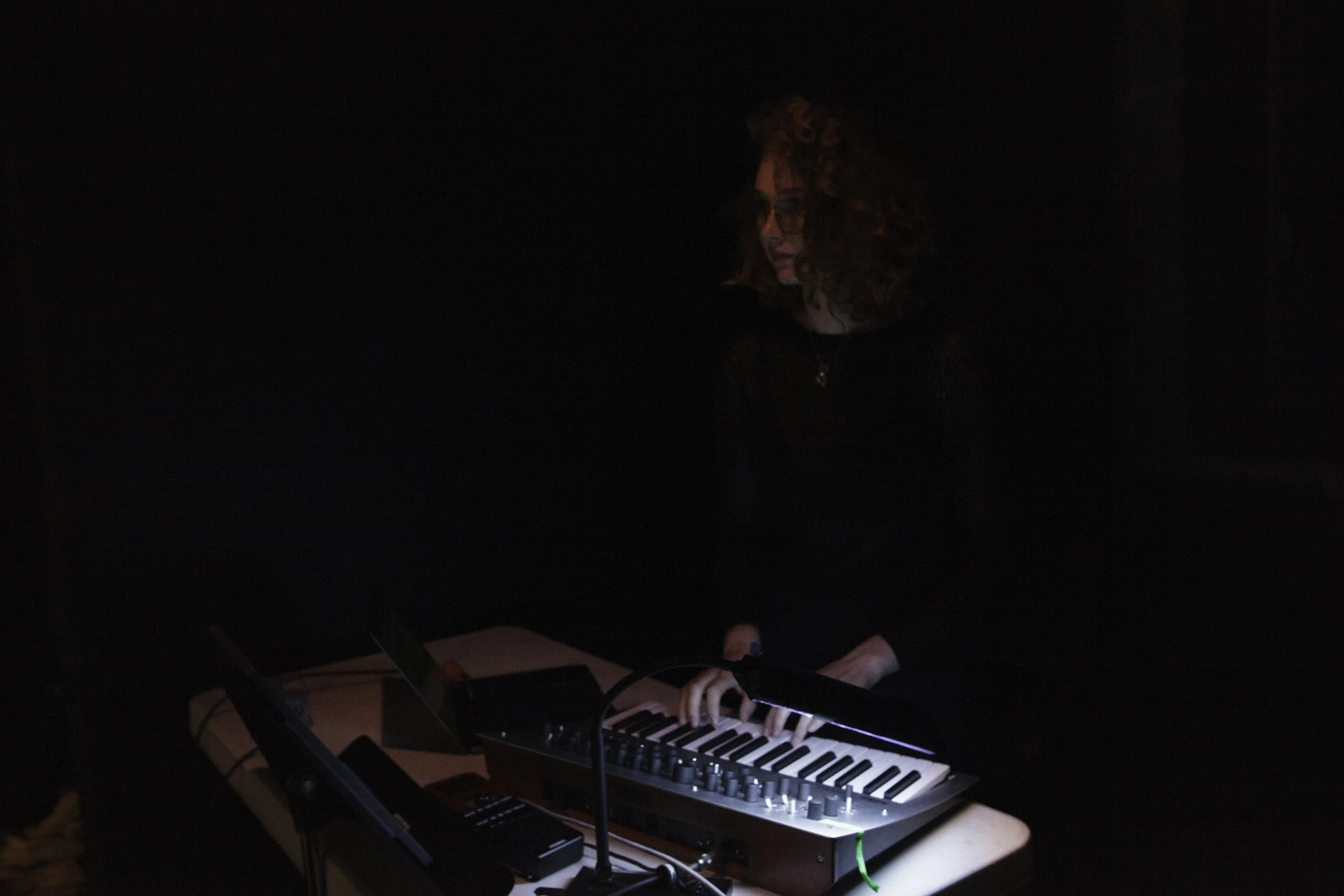
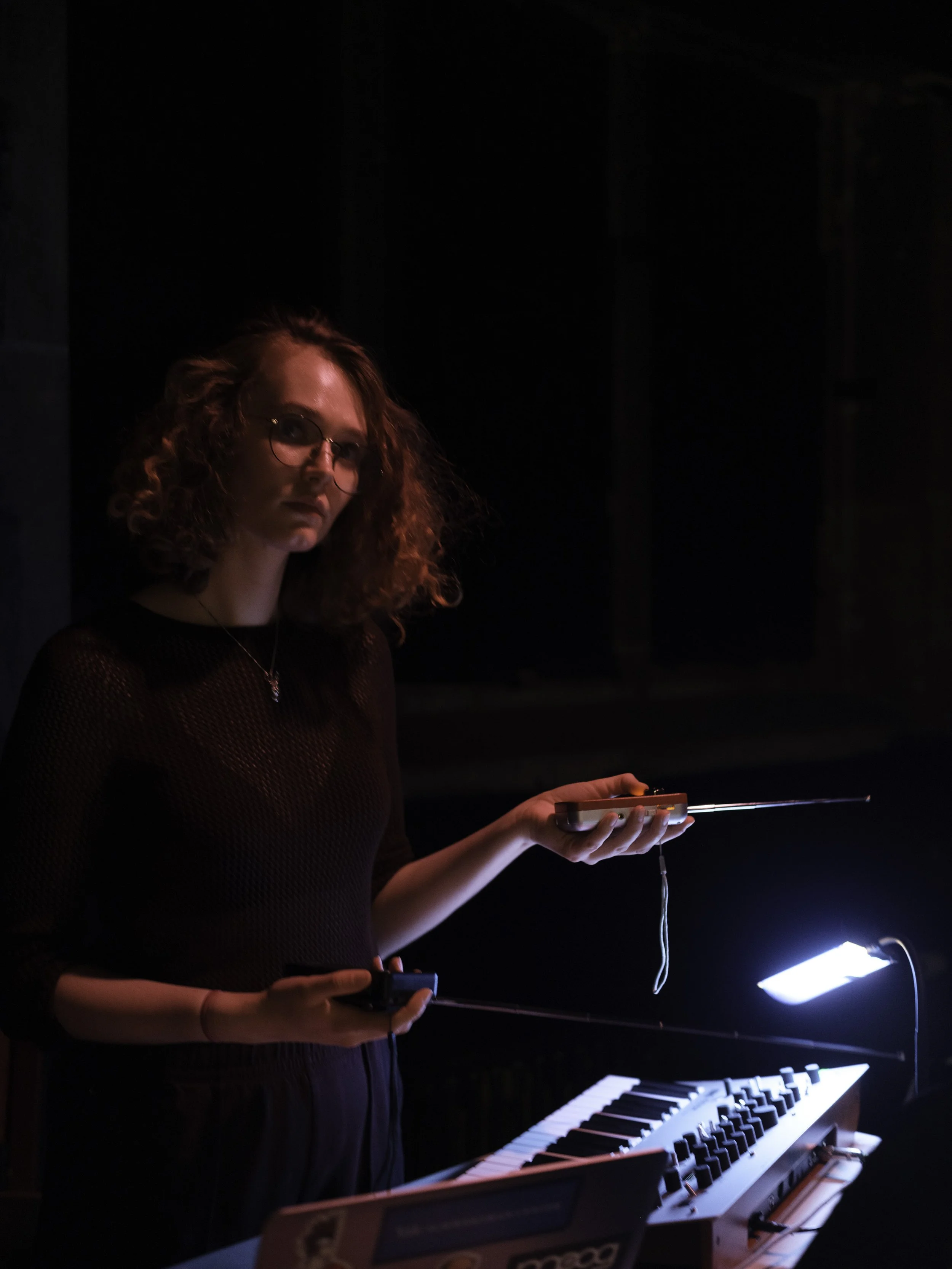
Violin Concerto (2025) shows long-form emotional narrative with varied timbral textures, from “cyborg quartet” of synth, theremini, organ, & amplified violin, to full chamber orchestra. The musical language is very flexible, concisely oriented around 2 original lullaby fragments which are fractured, buried, & unearthed algorithmically, but never revealed fully. I was aesthetically inspired by diverse materials all connecting to science fiction traditions, such as Wurlitzer organs, existential anxieties about the infancy of artificial intelligence, Clara Rockmore’s theremin, 1920s-40s Hollywood film scores, George Antheil’s approach to the timbre of repetition, and Hedy Lamarr’s use of the player piano to invent radio frequency hopping. This project also demonstrates significant practical production skills, such directing, library, management, promotion, operations, and multiple performing competencies. It is performed by Emma Meinrenken (solo violin), Forrest Eimold (Korg Minilogue), Isza Wu (pipe organ), myself (theremin, electronics), and musicians from the Yale School of Music.
Violin Concerto, second movement excerpt time code: 28:16-35:22
Project 4:
(un)aspirated (2025), an orchestra piece in 3 tableaux, takes its inspiration from an autobiographical memory as well as from the abstract sonic interpretation of the word itself:
"aspiration":
1. lofty ambition
2. unvoiced air
3. breathing in
4. procedure in which the body is punctured
5. complication in which internal fluid floods the lungs, drowning the patient.
The piece imagines the orchestra as corporeal entity: body dying, body irradiated, body on invisible fire. The narrative arc begins in an unaspirated soundworld, hazy, drugged, and anticipatory. It traverses through an MRI machine in the second movement, which is literally transcriptions of field recordings I made using both intuitive (piano) and scientific (spectrogram) means. After being irradiated by this material, the music finally collapses via the shocking entry of the needle. The third movement proceeds as a pair of intertwined opposites that move uncontrollably forward: the puncture and then its aftershocks and resonances. Although the danger is finished, the response to it is not.
My artistic practice has come to involve, in recent years, usually performing in my own work, in a traditional capacity as a conductor or violinist, or in new blended roles utilizing dance, theater, synthesizer, theremin, and other multimedia skills. However, I have also had in the past extensive experience in the more traditional notated world, from which I get my love of orchestra music. (un)aspirated demonstrates my orchestrational capacity within a more standard notated orchestra piece.
(un)aspirated excerpts:
ADDITIONAL SUPPLEMENTAL MATERIALS
Project 1 & 2:
Waiting Room (2025) & Self Portrait with White Coat (2025) are two very different opera scenes created as studies for Patience, a 1-act multimedia opera I am currently completing with a collaborative network of representatives from public health, history of science and medicine, bioinformatics startups, classical opera houses in the US and Europe, and theater spaces.
They both demonstrate innovative ways of utilizing pre-existing technological ecosystems and mixing prerecorded characters and live performers as scene partners. Waiting Room specifically draws from my dance/movement theater/improv background and approach to blending instrumental, stylized, and expressive gesture. It is performed by myself (movement, film, speaker feedback instrument), Han Xia (percussion), and Christina Herresthal (mezzo-soprano in fixed media).
Self-Portrait was commissioned by the Tanglewood Music Center and shows my ability to be sonically creative, set text, express narrative, & blend media with acoustic performers within a traditional classical opera soundworld, delivering something new and striking, but not alienating, to a well-educated classical music festival audience. It is performed by Danielle Romano (Doctor One), John Arlievsky (Doctor Two), Alison Norris (conductor), Christina Herresthal (Patient in fixed media), myself (electronics and Korg Minilogue), and fellows from the 2025 Tanglewood Music Center.
Waiting Room excerpt time code: 5:12-9:10
Self-Portrait with White Coat excerpt time code: 2:07-6:34
Play in One Act (2025) is a semi-improvised co-composition with three other creative performers. Its theme is the relationship between power and (dis)obedience.
What does it mean when someone chooses or is influenced to obey or disobey? Is that choice perceptible? While I suggested the subject matter and the format, we worked together through improvisation and dialogue to shape the formal structure and musical materials. It demonstrates my ability to work with teams and to collaborate with performers of non-Western instruments.
It is performed by myself (violin), Sepehr Pirasteh (alto kamancheh), Parsa Ferdowsi (santour), Nico Mateo Hernandez (double bass) and requires fixed media and two mics for amplification of a raised hollow wooden platform or podium.
Scream Queens (2026) is a musique-concrete inspired work for solo pianist and video. It was written for Joey Vasconi.
The piece was initially inspired by Anne Carson’s essay, “The Gender of Sound” (2025):
“the women of classical Greek literature are a species given to disorderly and uncontrolled outflows of sound – shrieking, wailing, sobbing, shrill lament, loud laughter, screams of pain or of pleasure, and eruptions of raw emotion in general. Female sound was judged to arise in craziness and to generate craziness. We detect a certain circularity in the reasoning here. If women’s public utterance is regularly reassigned to the expression of nonrational sounds like the ololyga or funeral lament cry then the so-called natural tendency of the female to oral disorder cannot help but become a self-fulfilling prophecy.”
As the title suggests, this piece also became about the American cinematic trope of the scream queen: the skinny and often blonde white woman who exaggeratedly performs pain and terror in the female body for mass entertainment, who is often either an expendable extra with a violent Act I death that simply advances the plot or the "final girl" who survives inhuman ordeals due to her conformist virtue. If the actors in the films are the victims of my authorial objectification as abstract sonic objects, they themselves are also complicit in the use of their bodies to satisfy our desire as a society and an audience to watch women being harmed and punished for desensitized, dehumanized fun.
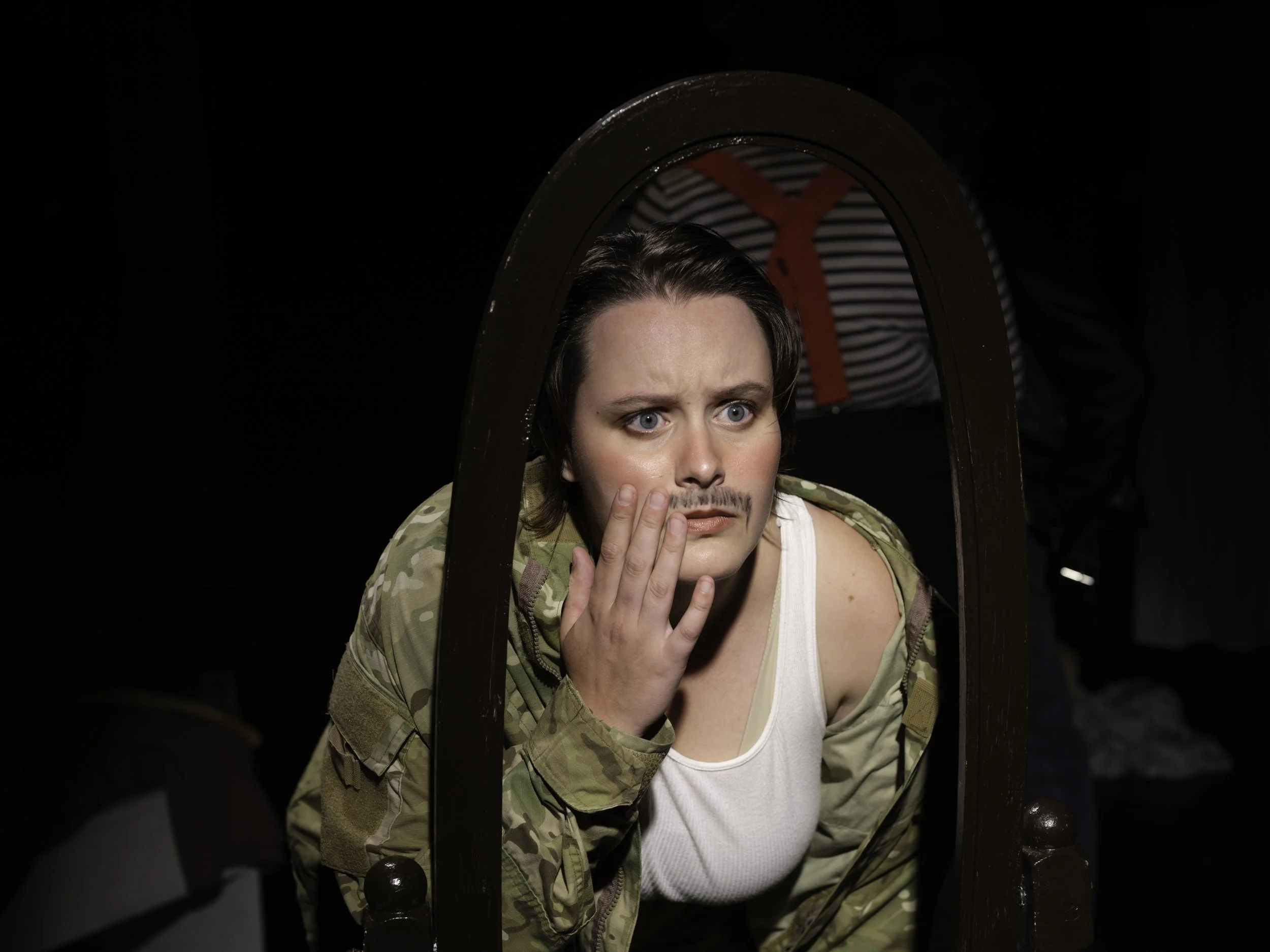
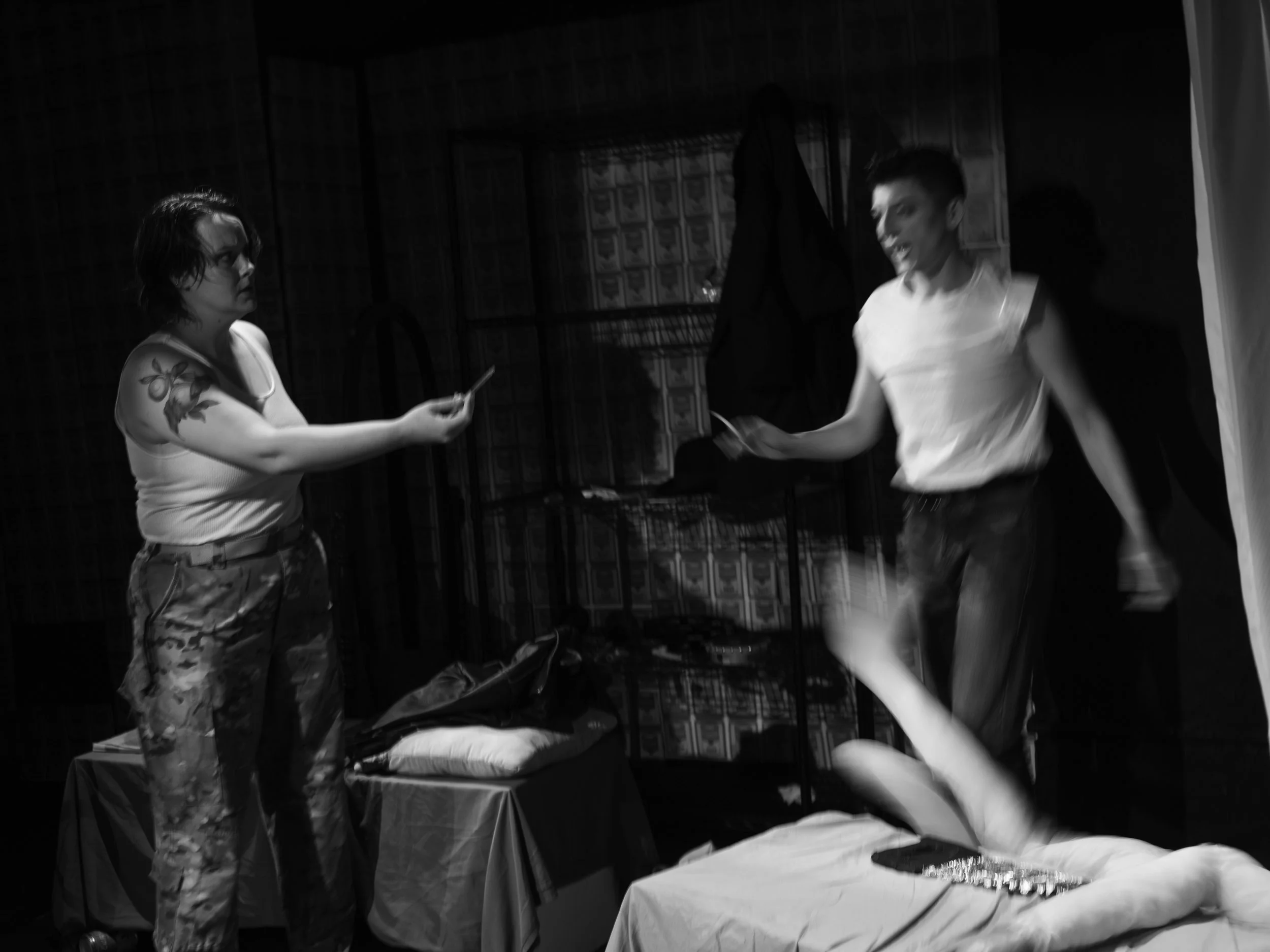
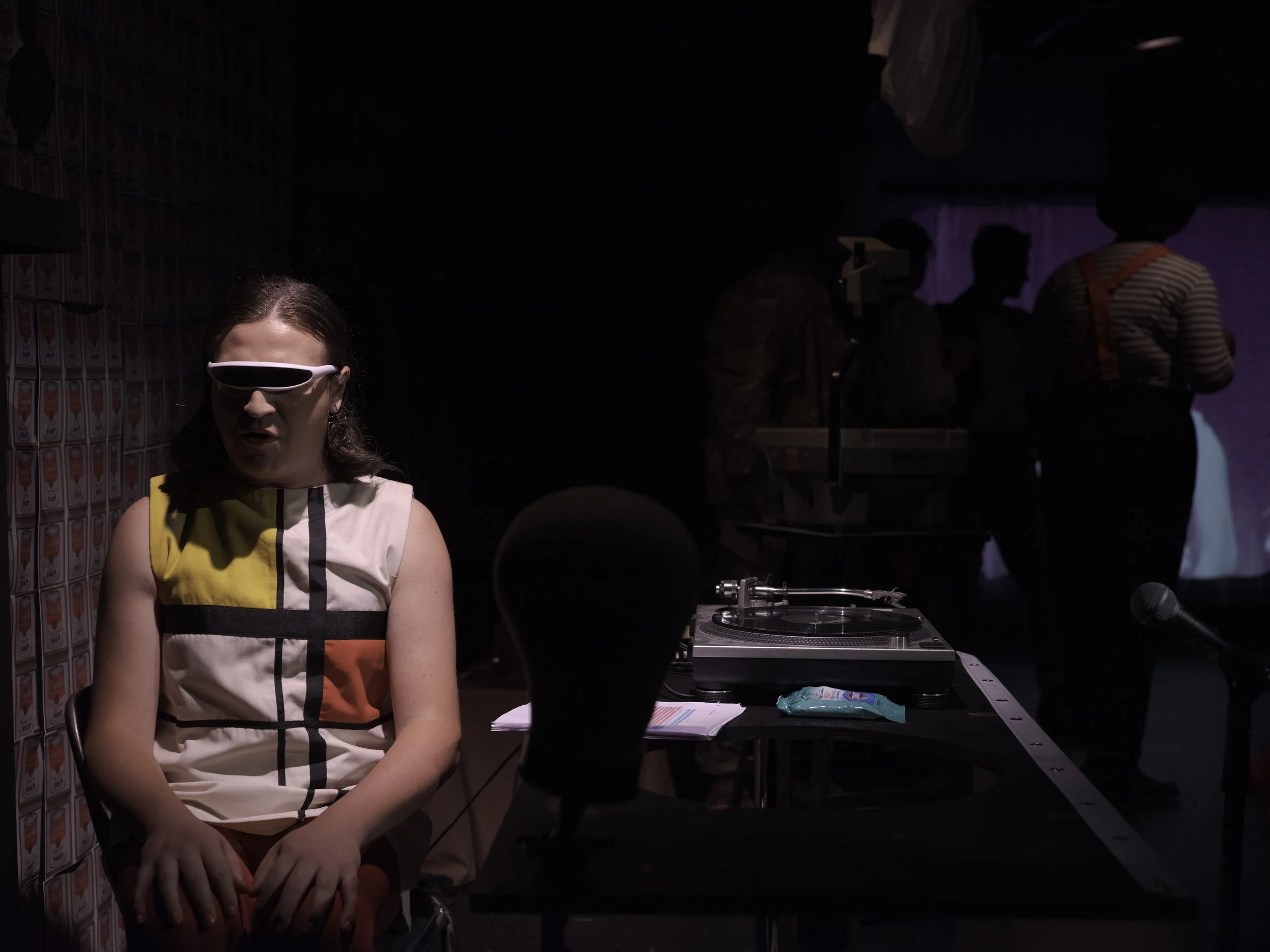
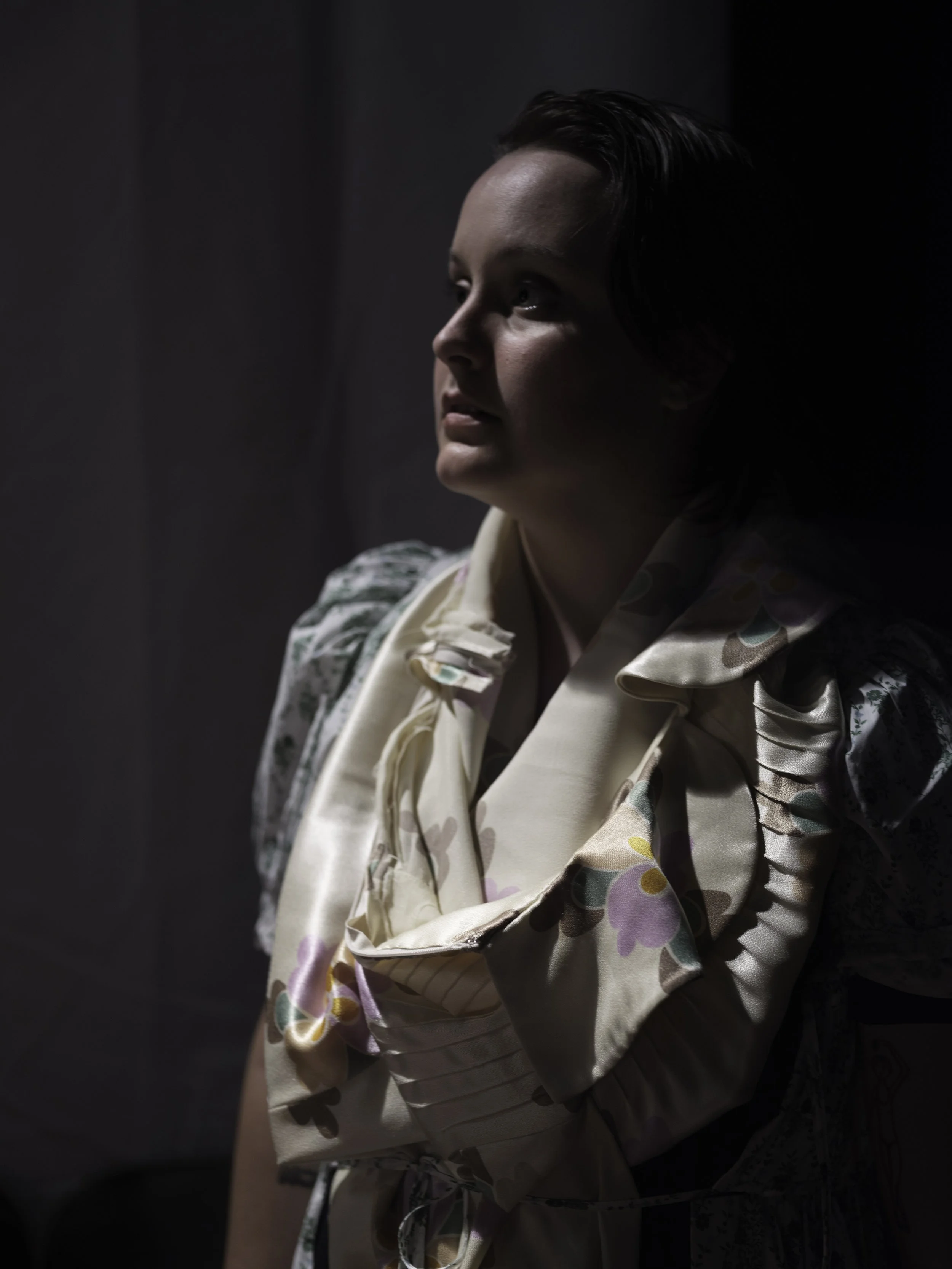
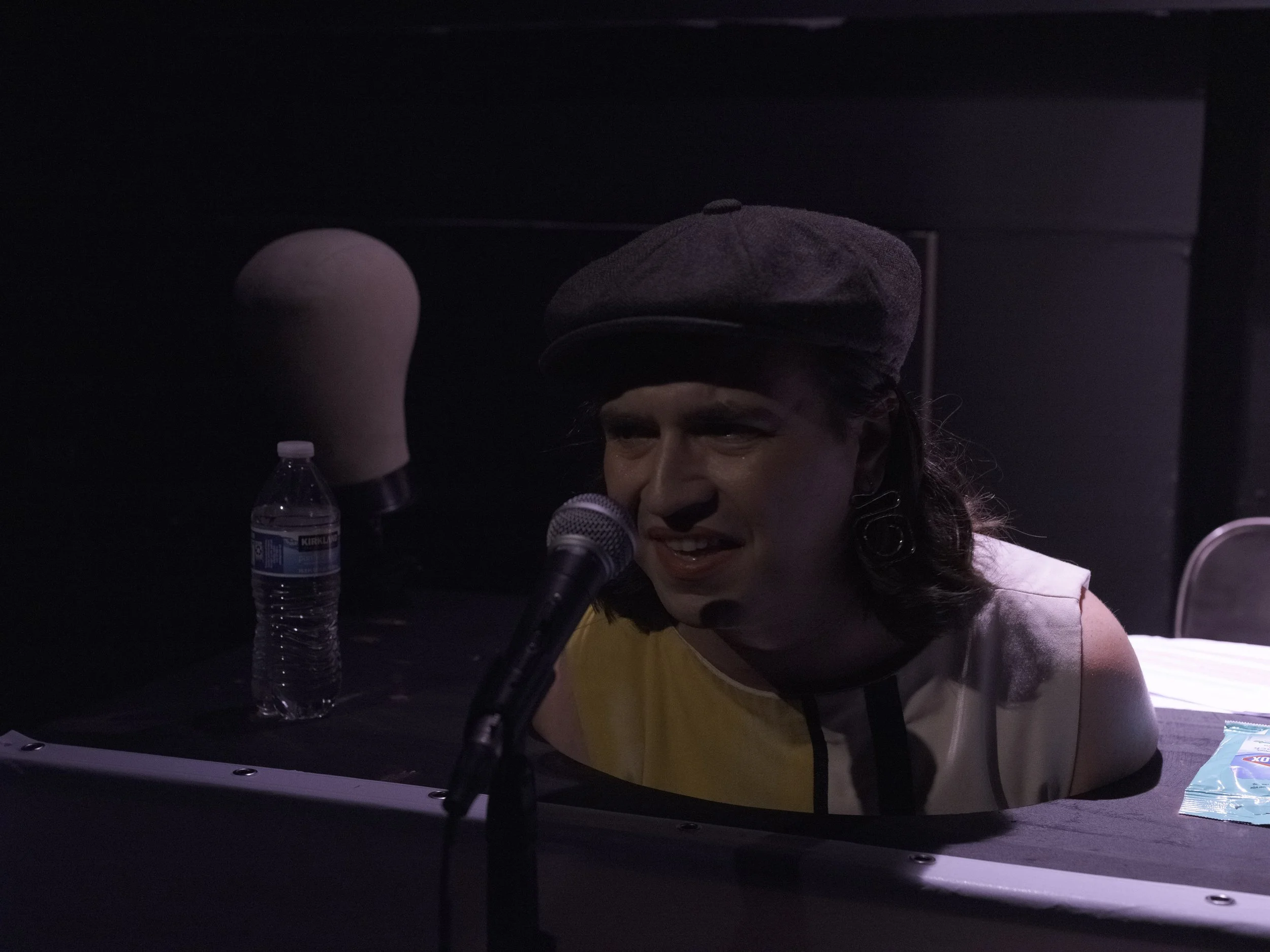
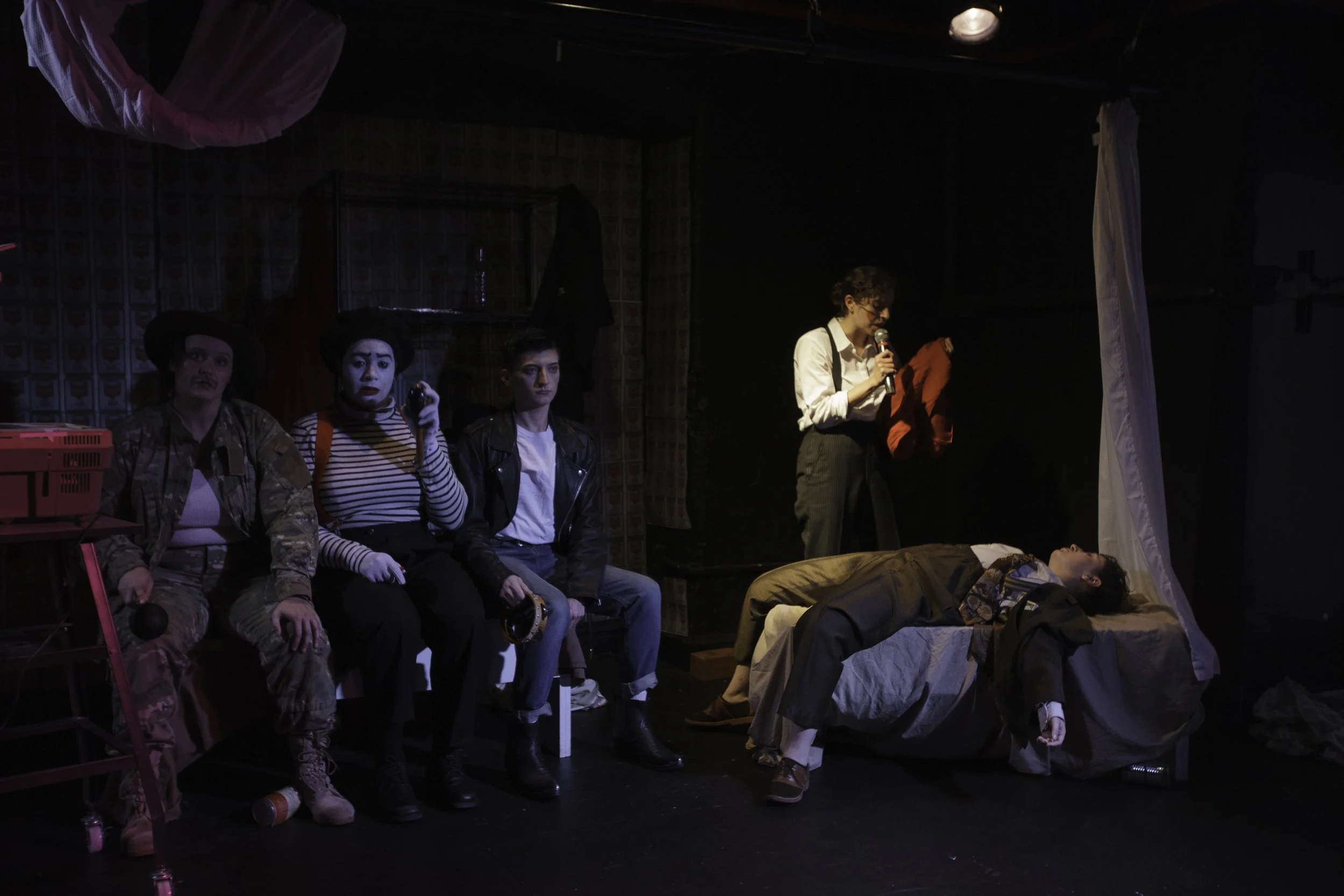
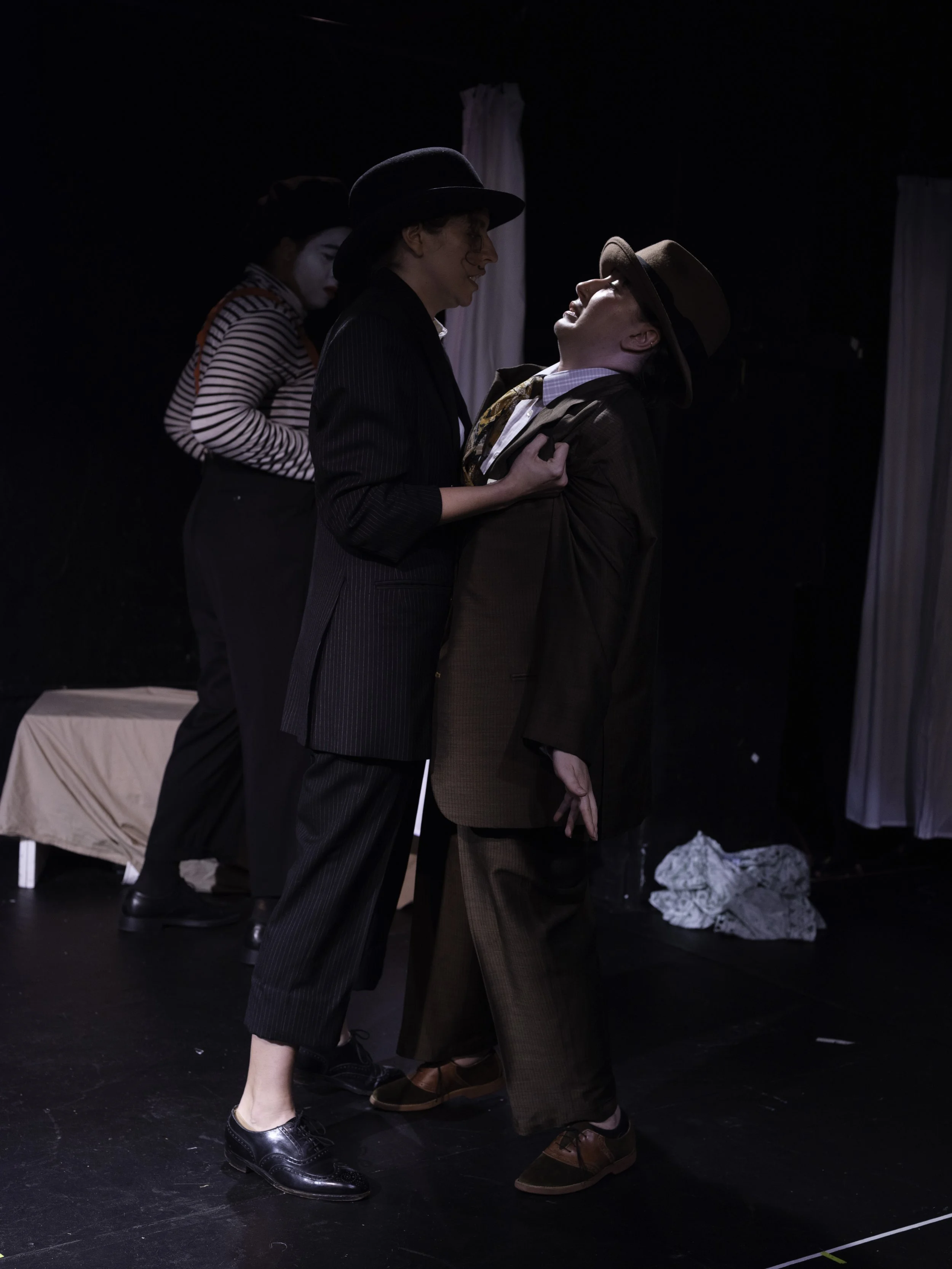
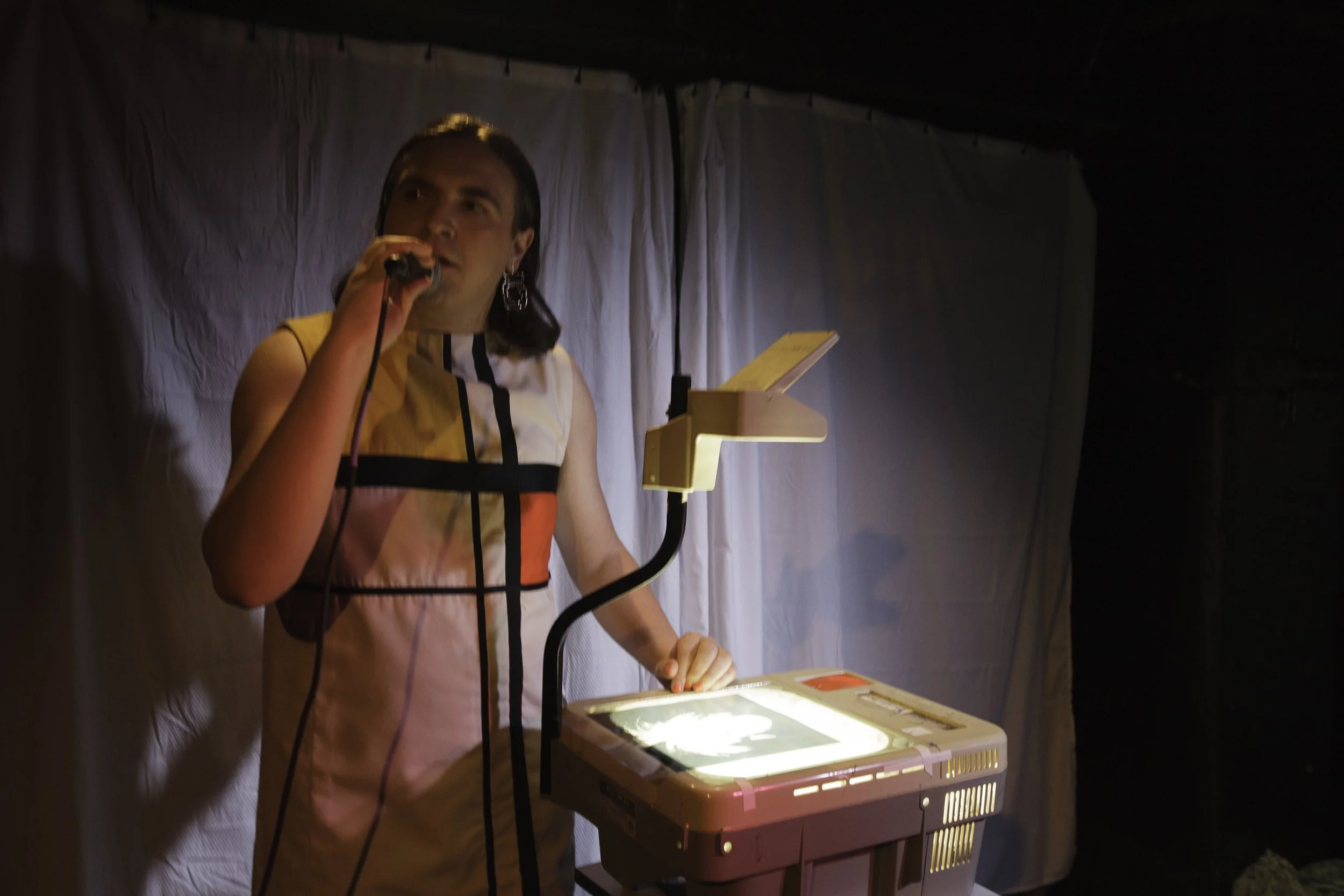
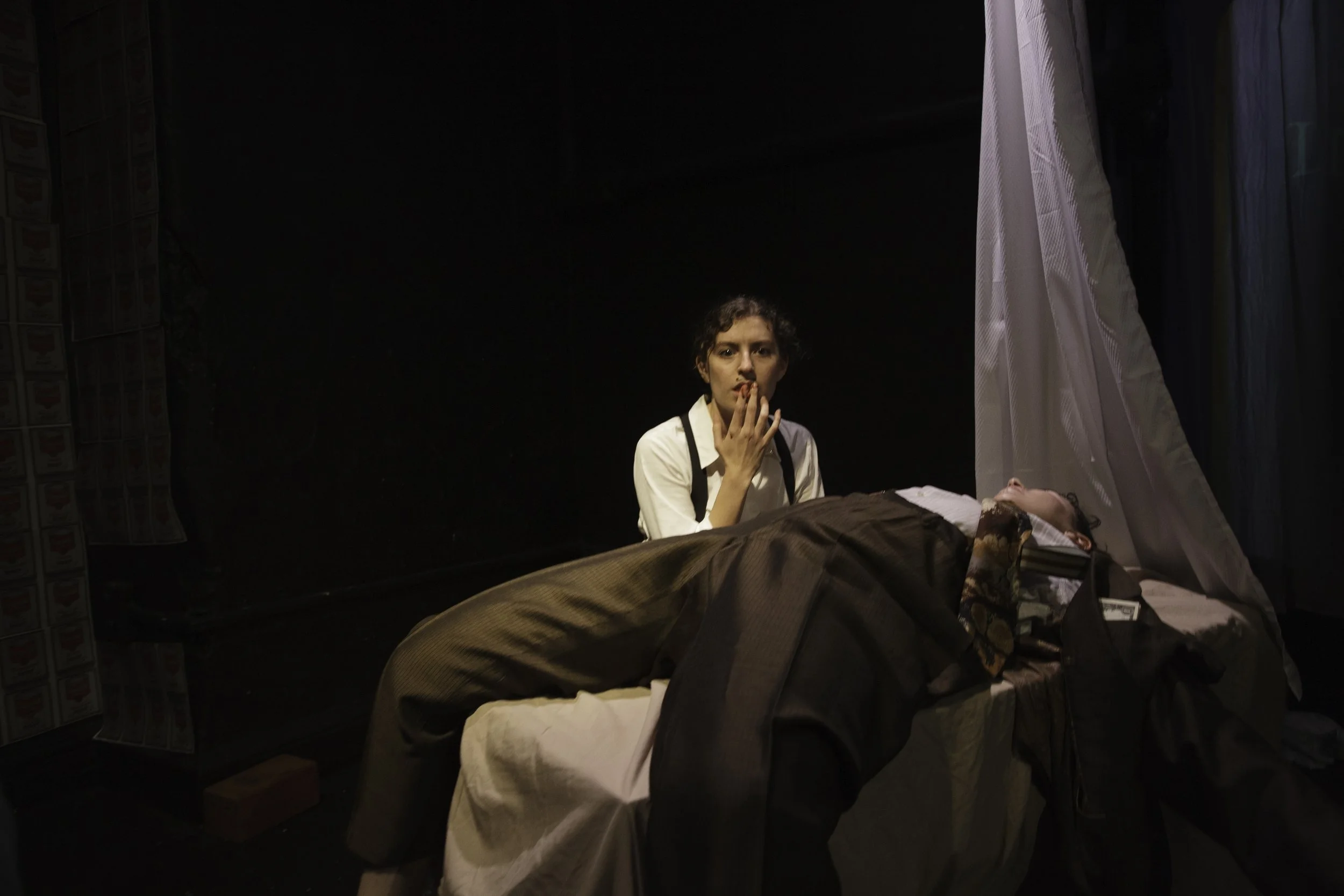
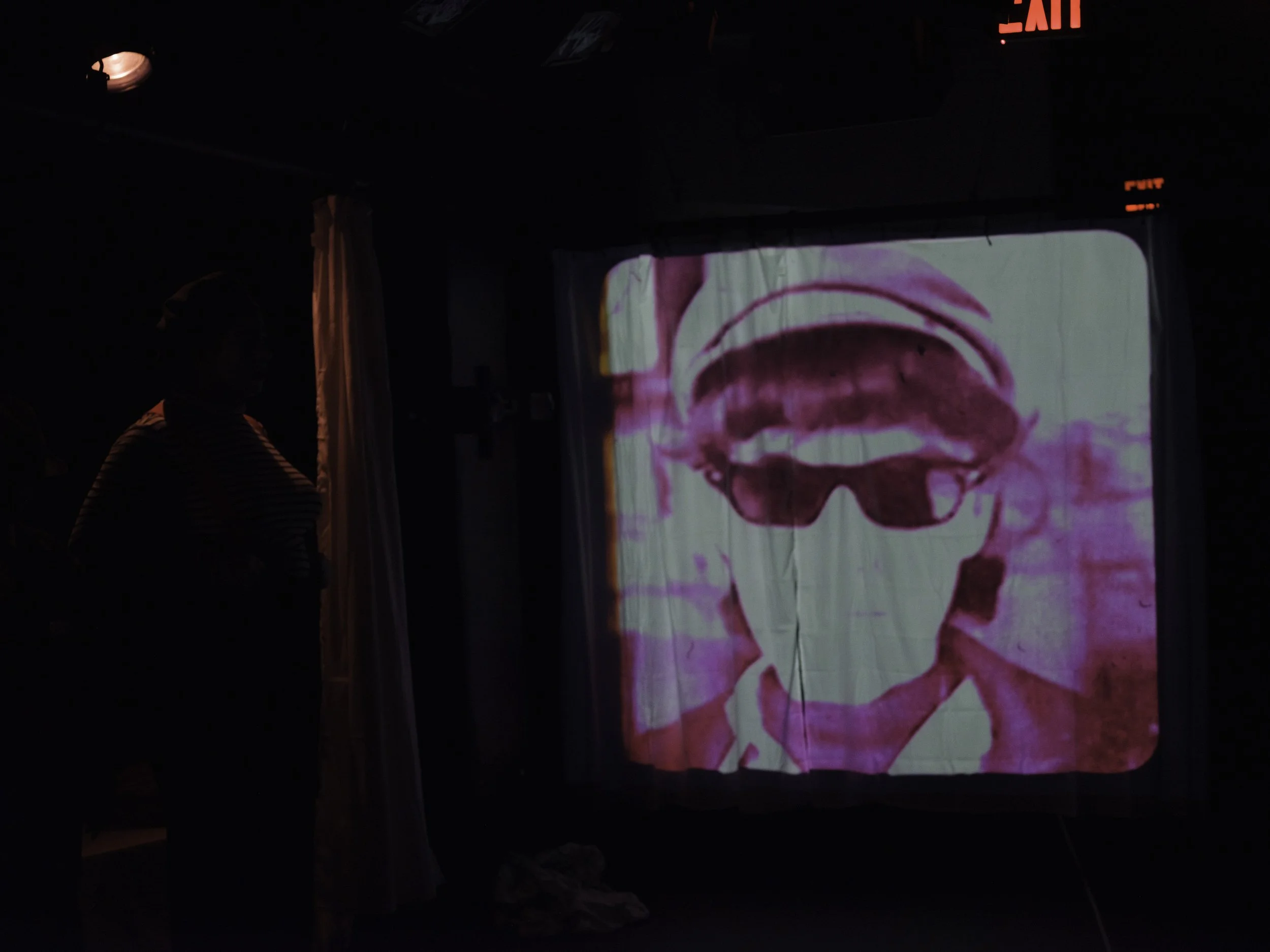
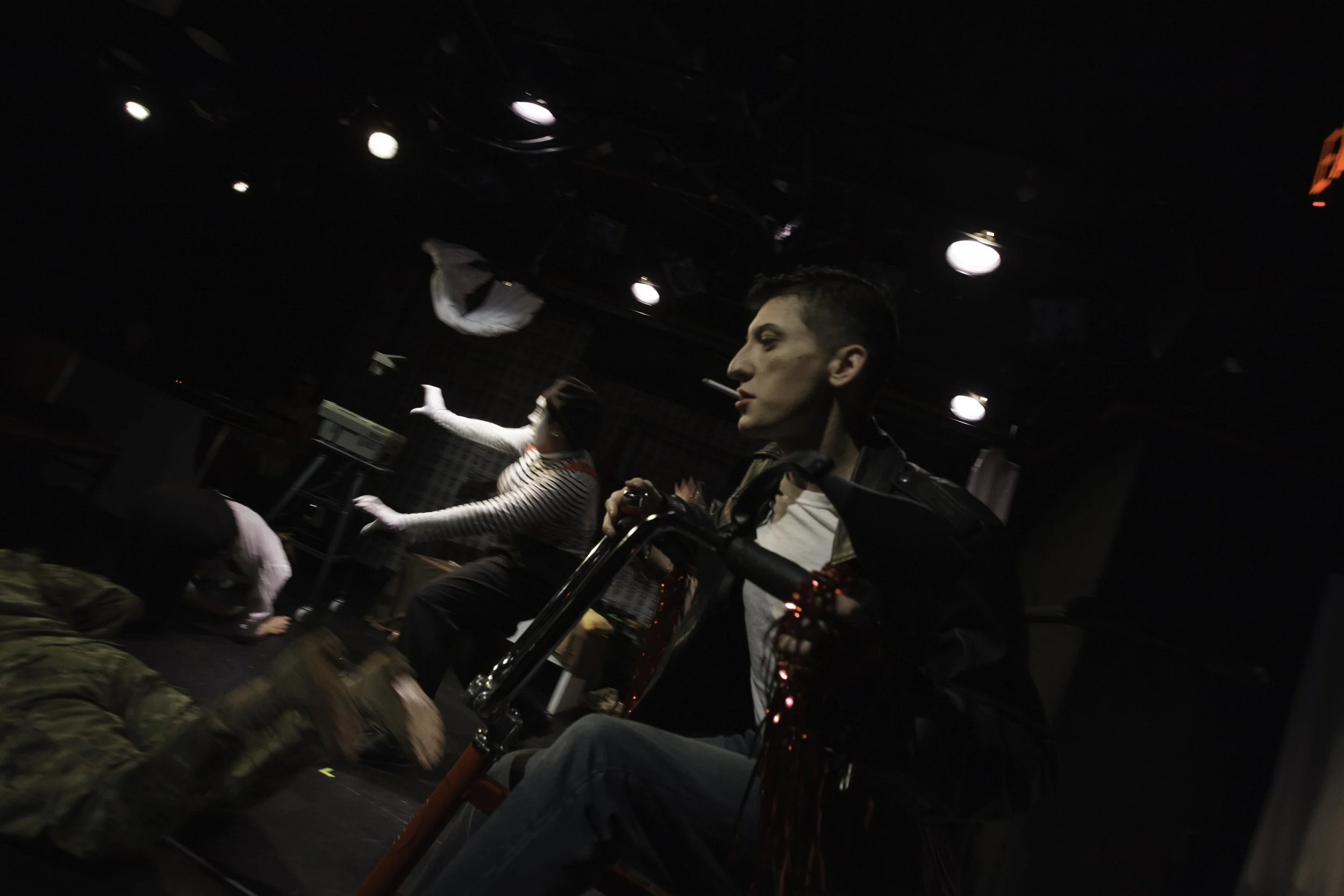
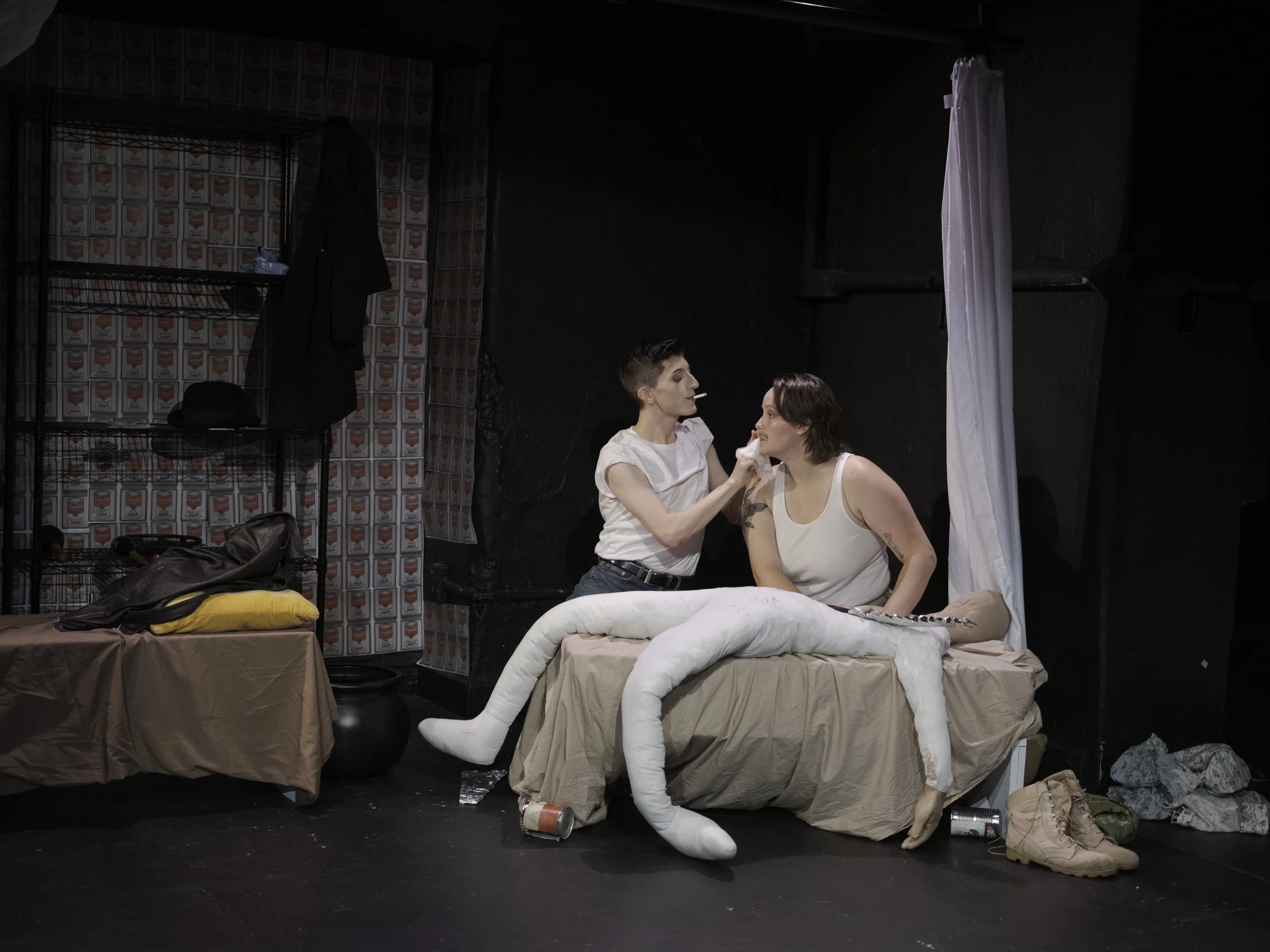
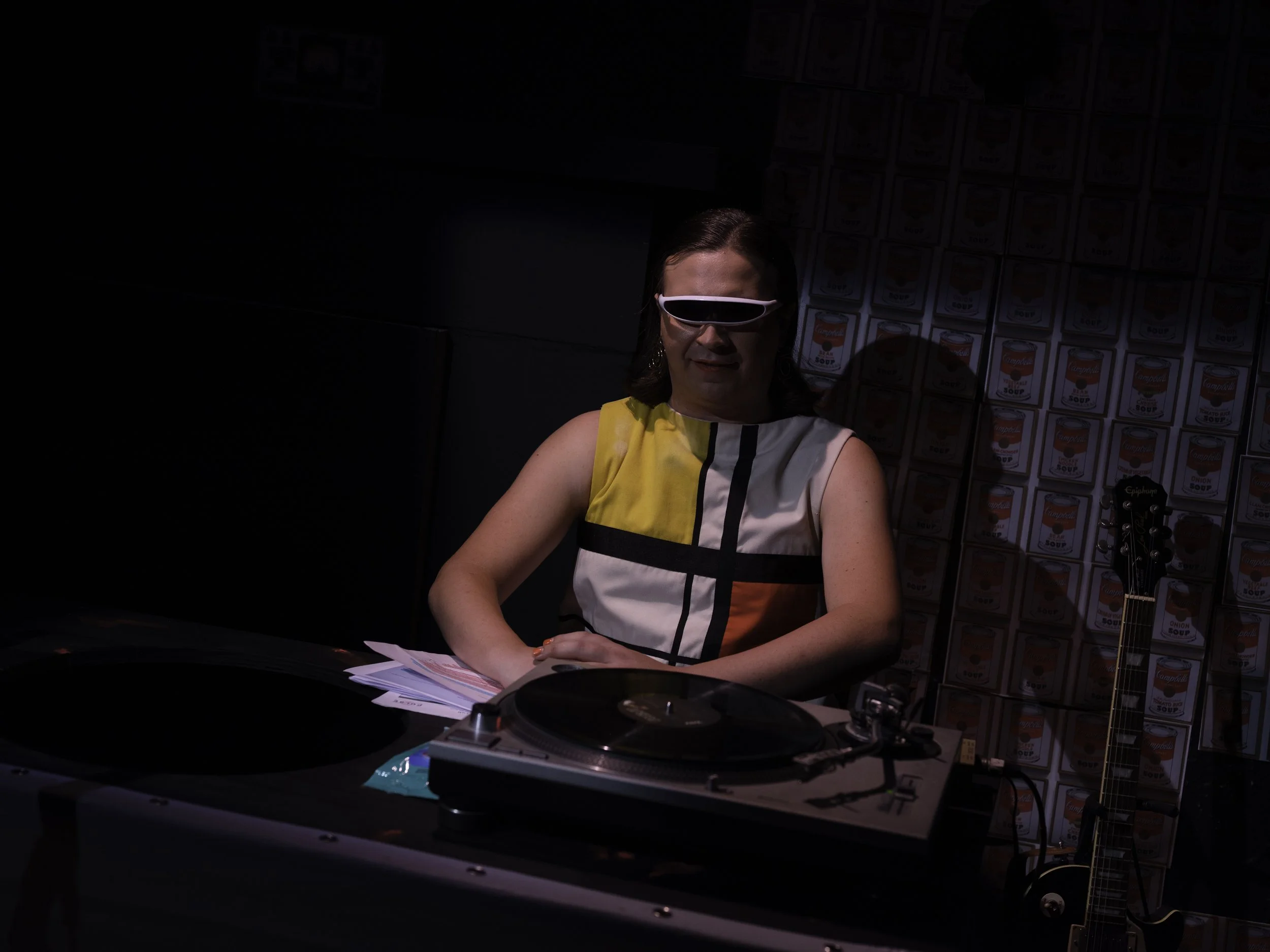
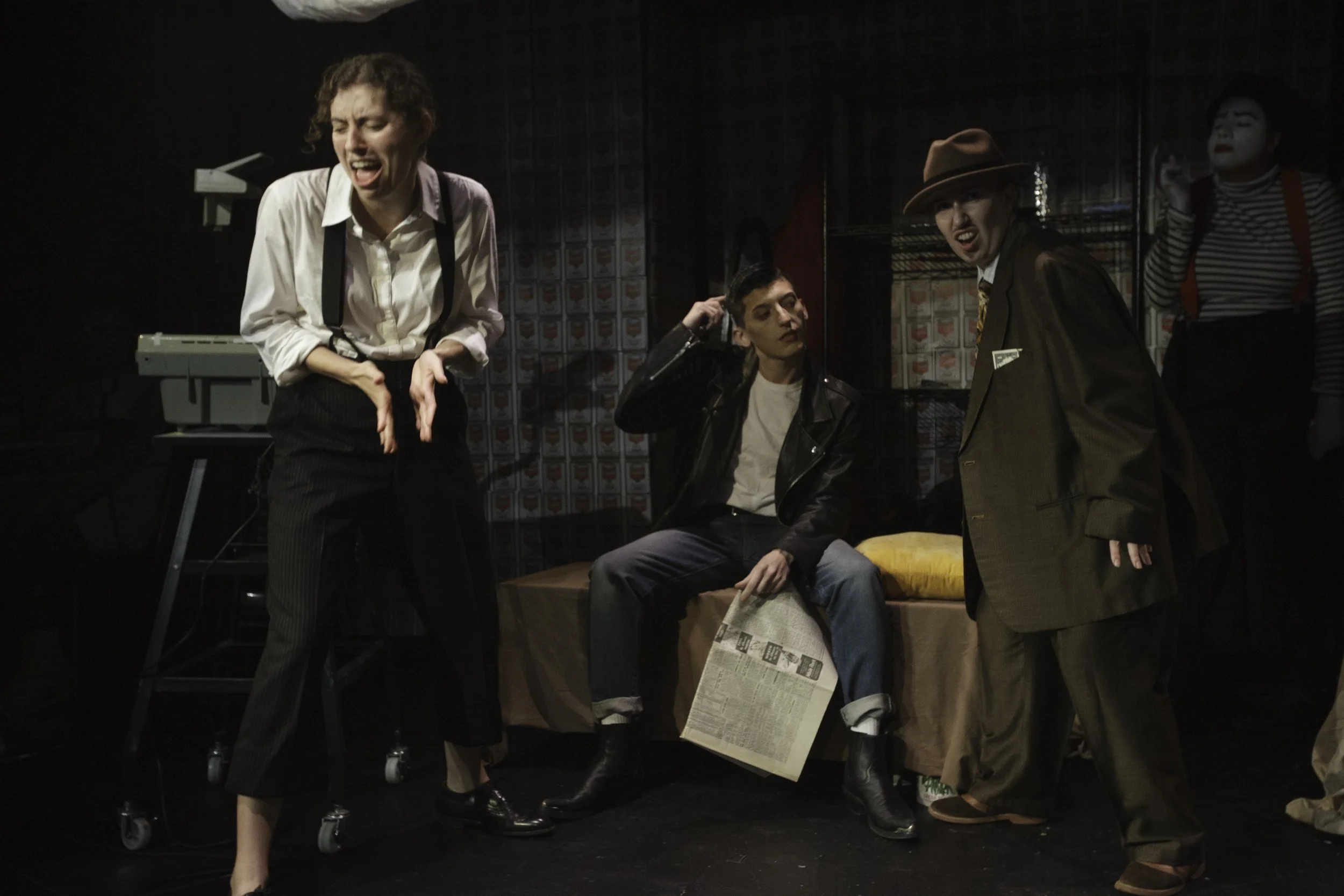
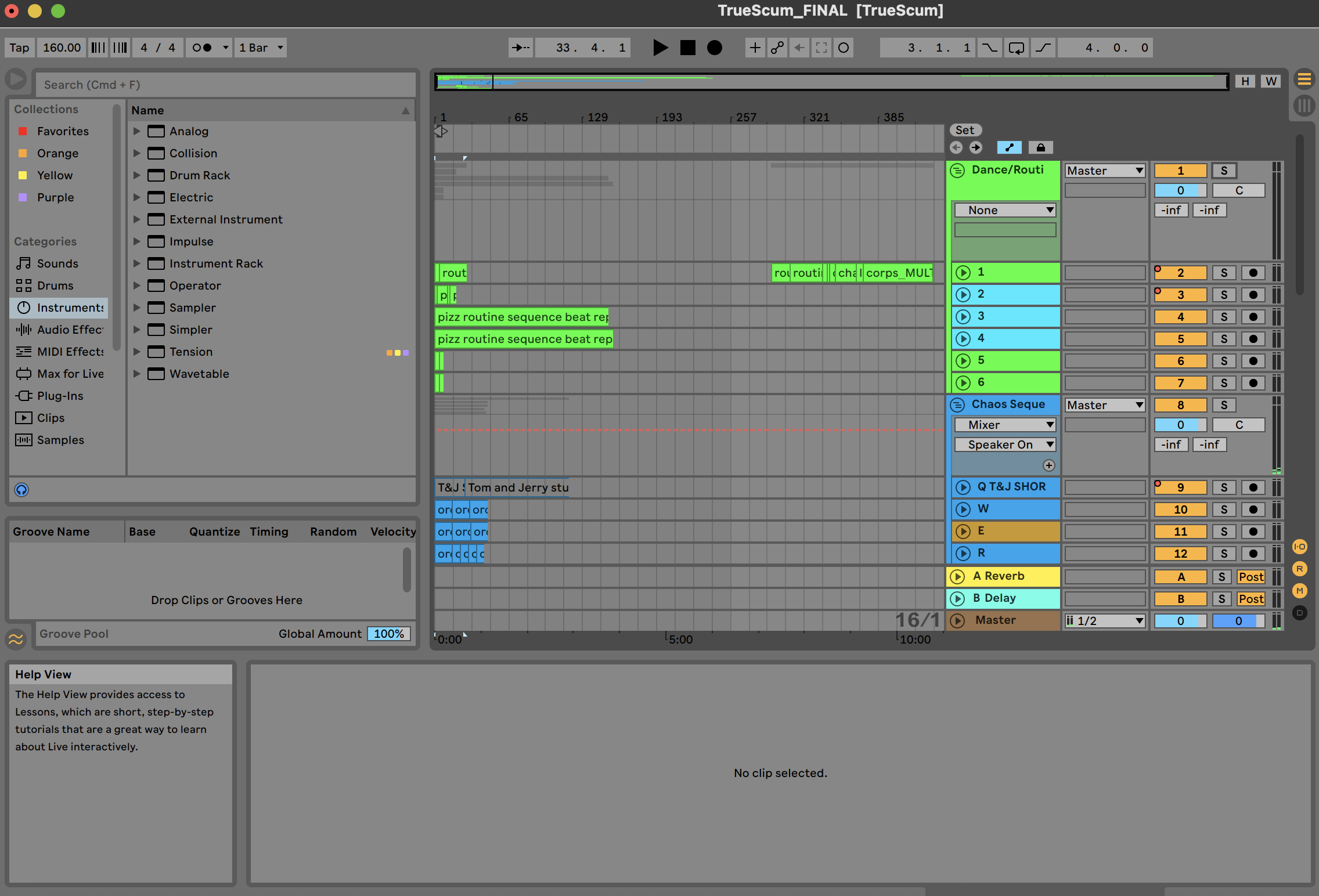
True Scum (2025) is a new devised play by Yale School of Drama dramaturgs A.B. Orme and Daria Kerschenbaum for which I composed new music, and in which I performed as a live musician (drum, live electronics, radios, Korg Minilogue, voice). It is a satire imagining an alternate universe in which Valerie Solanas’ Scum Manifesto was taken up into a political movement that results in the apocalyptic genocide of the entire male gender. The action takes place in a bunker in which trope characters reckon with their stereotyped identities and transition genders. Although recorded documentation of the performances was not allowed, I have attached still image documentation of an Ableton file as well as production photos. It was premiered at the Yale Cabaret in September, 2025.
-
![]()
-
![]()
-
![]()
-
![]()
-
![]()
-
![]()
-
![]()
-
![]()
-
![]()
-
![]()
-
![]()
-
![]()
-
![]()
-
![]()
-
![]()
-
![]()
-
![]()
-
![]()
-
![]()
-
![]()
-
![]()
-
![]()
-
![]()
New List Item